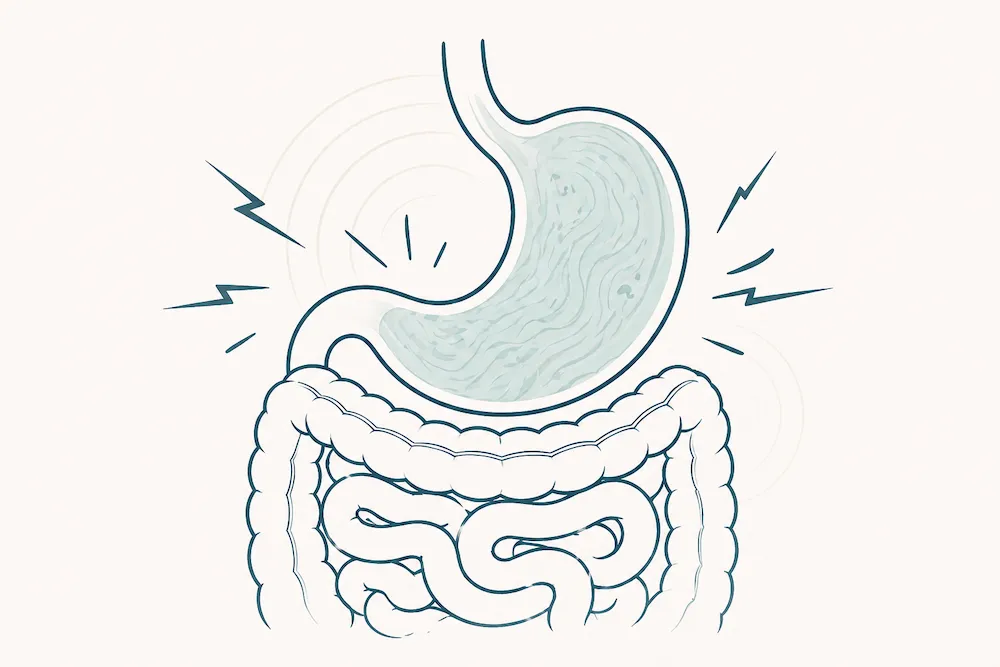
These mechanisms slow the passage of food through the intestines, leading to pain and other symptoms of IBS. Researchers have confirmed that stressful experiences, tested with complex pattern recognition tasks, make IBS patients more sensitive to non-painful stimuli. (10)
However, the exact mechanism for how stress causes IBS is not known. One theory suggests that people who are predisposed to IBS – by genetics or early life trauma – develop the condition after a long period of stress, which acts as the trigger. (11)
IBS causes stress?
It works the other way, too: IBS symptoms may cause stress. Normal GI activities, such as needing to go to the bathroom, may be misinterpreted by the brain of a person with IBS as a catastrophic event, triggering the ‘fight or flight’ response.
Or, they may suffer anxiety about the social situations in which symptoms occur. This misinterpretation of normal digestive processes as dangerous leads to stress.
Hence, a vicious cycle may emerge between IBS symptoms such as abdominal pain and stress. (12)
The biopsychosocial model
More broadly, the ‘biopsychosocial model’ (1980) explains how stress and anxiety may link to abdominal pain. As suggested by the name, the model proposes that biological, psychological, and social factors may all contribute to disease. Looking at IBS this way helps to explain how stress – a social and psychological factor – may have a biological effect on the gut. It also explains how therapies targeting the mind, such as hypnotherapy and CBT, make sense as treatments for gut symptoms.(13)
Confirming the model, scientists in China recently found a link between stress and IBS. They showed that a protein called NGF appeared in higher rates following early life trauma, and led to symptoms of IBS. Hence, the biopsychosocial model appears valid in IBS. (14)
How to calm a nervous stomach
Given the importance of the psychological process in IBS, it is unsurprising that psychological therapies are an effective treatment option. Several psychotherapies are effective in reducing gastrointestinal distress:
Gut-directed hypnosis (GDH). This hypnosis involves the patient visualizing their gut as a set of slimy tubes and other gut-related imagery. This helps to restore the gut-brain communication to reduce symptoms of IBS. Smartphone-based versions such as Nerva have recently become available, and offer convenient access to hypnotherapy. (15)
Cognitive-behavioral therapy (CBT). This skill-based therapy teaches control over negative thought patterns and modifies patterns of behavior. Relaxation techniques help to control the stress response, and cognitive restructuring allows the patient to avoid catastrophizing. These techniques help to reduce the symptoms of IBS. (16)
Mindfulness-based therapies. This practice involves attending to the present moment and cultivating non-judgemental attitudes. Mindfulness therapies reduce levels of stress and sensitivity to pain, a key symptom of IBS. The effects have been shown to last over three months (17), although these therapies can be less effective than GDH and CBT.
These treatment options are likely to target both symptoms of anxiety, and functional symptoms such as abdominal pain. Psychological therapies, especially gut-directed hypnotherapy, have been shown as effective, if not more effective, than diets and medications for relieving IBS symptoms.
Other treatments for IBS
The following treatments are also available for IBS. However, the effectiveness can be lower than for psychotherapies:
Low FODMAP diet. This diet eliminates common ‘trigger compounds’ of IBS such as fructose and lactose and has been shown effective in treating IBS. (18)
Antidepressant medication. Low dose treatments of selective serotonin reuptake inhibitors (SSRIs) and tricycle antidepressants (TCAs) have been shown to relieve symptoms of IBS. (19, 20)
Peppermint oil. It's been shown that peppermint oil is a natural anti-spasmodic which means it can relax the smooth muscles in the gut, improving some of the symptoms of IBS.
When should I see the doctor?
If gastrointestinal symptoms and pain persist for more than a few days, you should consult a doctor. You may be instructed to undertake certain tests or see a specialist if there are signs of a more life threatening medical condition. If you experience abdominal pain and the following symptoms, you should consult a doctor as soon as possible:
These symptoms may suggest the pain is linked with a biological disease and is not a symptom of IBS or another functional gastrointestinal disorder.
Alternative causes of abdominal pain
As well as from functional gastrointestinal disorders, there are many other sources of abdominal pain. This pain may arise from inflammation, distension, and stretching or impaired blood supply. These include:
Heartburn (indigestion after eating)
Gallbladder inflammation
Ulcerative colitis
Crohn’s disease
Kidney stones
Gluten intolerance (coeliac disease)
Menstrual cramps
Gastroenteritis (inflammation)
Irritable bowel syndrome
Ischemic colitis
Vasculitis
Pregnancy (21)
Diagnosis of abdominal pain
If you experience abdominal pain and other GI symptoms, your physician will likely ask you a series of questions, addressing the pattern and persistence of the pain. A range of diagnostic tests may also be used to assess for certain medical conditions, including:
Treatments for abdominal pain
A range of treatment options are available for abdominal pain of biological origin, depending on the cause. These include:
Antibiotics for gastroenteritis
Antacid for gastroesophageal reflux disease (GERD).
Surgery, for bowel obstruction
Corticosteroids for ulcerative colitis or Crohn’s disease
Loperamide for diarrhea-induced cramping
Painkillers (e.g., paracetamol) (23, 24)
Pain Hypnosis
Preventing abdominal pain
Some forms of abdominal pain require medication or surgery. However, certain behaviors may minimize the risk of many types of abdominal pain:
Exercising correctly and making fitness-based lifestyle changes
Eating a healthy diet, rich in vitamins and minerals
Staying hydrated
Taking herbal remedies such as ginger and peppermint
Limiting alcohol consumption
A Word from Mindset Health
If you suffer anxiety and abdominal pain, and diagnostic testing finds no physical cause, you may have IBS. The gut-brain connection suggests how physical symptoms of IBS such as stomach aches may be linked to anxiety symptoms and stress levels. Seeking help from a mental health professional and receiving psychotherapies such as gut-directed hypnosis will offer the chance for your gut and mind to be healed as one.
References
Bommelaer G, Poynard T, Le Pen C, Gaudin AF, Maurel F, Priol G, Amouretti M, Frexinos J,Ruszniewski P, El Hasnaoui A. Prevalence of irritable bowel syndrome (IBS) and variability of diagnostic criteria. Gastroenterologie clinique et biologique. 2004 Jun 1;28(6-7):554-61. Link
Masand PS, Kaplan DS, Gupta S, Bhandary AN, Nasra GS, Kline MD, Margo KL. Major depression and irritable bowel syndrome: is there a relationship? The Journal of clinical psychiatry. 1995 Aug. Link
De Palma G, Collins SM, Bercik P, Verdu EF. The microbiota–gut–brain axis in gastrointestinal disorders: stressed bugs, stressed brain or both?. The Journal of physiology. 2014 Jul15;592(14):2989-97. Link
Drossman, D.A., 2006. Rome III: the new criteria. Chinesejournal of digestive diseases, 7(4), pp.181-185. Link
Garakani, A., Win, T., Virk, S., Gupta, S., Kaplan, D. and Masand, P.S., 2003. Comorbidity of irritable bowel syndrome in psychiatric patients: a review. American journal of therapeutics, 10(1),pp.61-67. Link
Foster, J.A. and Neufeld, K.A.M., 2013. Gut–brain axis: how the microbiome influences anxiety and depression. Trends in neurosciences, 36(5), pp.305-312. Link
Cryan, J.F. and O’mahony, S.M., 2011. The microbiome‐gut‐brain axis: from bowel to behavior. Neurogastroenterology & Motility, 23(3), pp.187-192. Link