For clients who don’t experience relief after six weeks, it’s important to know that with every therapy, there will be non-responders, and the plan won’t always work for everyone. However, before dismissing the low FODMAP diet approach, ensure your client is adhering to the plan by checking their food and symptom diary. Draw correlations between their symptoms, diet, and lifestyle to understand the bigger picture.
Introducing gut-directed hypnotherapy
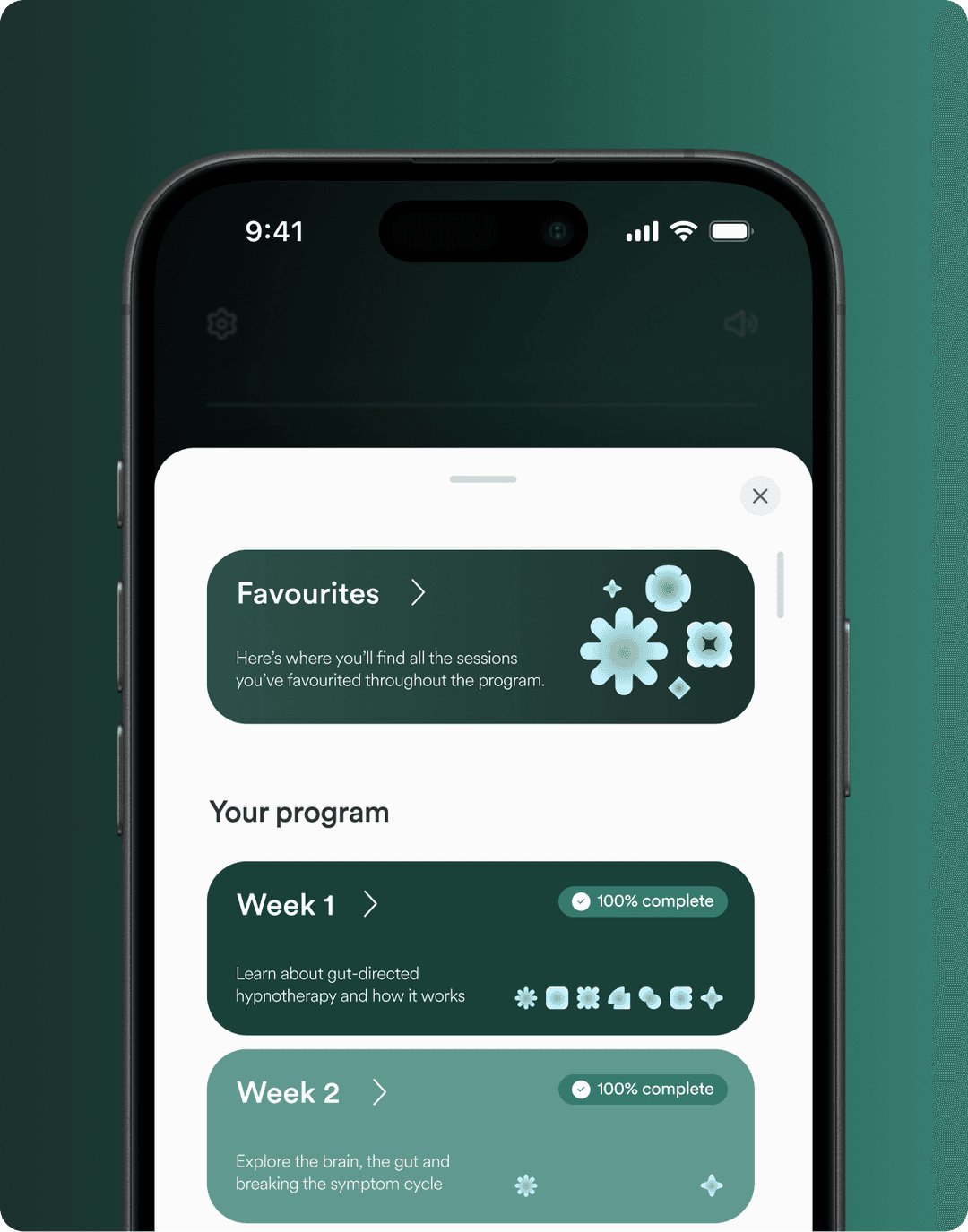
You can introduce your clients to gut-directed hypnotherapy via an app like Nerva in conjunction with the low FODMAP diet. Alternatively, they can begin a hypnotherapy program on its own before any kind of dietary intervention, research has shown the outcomes are similar.
Researchers haven’t identified which particular patient groups would best benefit from gut-directed hypnotherapy, suggesting that all patients with IBS could see improvements in symptoms (just know, it’s not suitable for those that have been diagnosed with or experience psychosis). And the good news is the science has shown that 9 out of 10 Nerva users report improved IBS management after completing the six-week program.
Your clients can access gut-directed hypnotherapy by seeing a psychologist privately or starting the Nerva app’s six-week program. The advantages to Nerva are it’s accessible (the program can be completed anywhere, anytime), it’s affordable, and it’s all backed by research from Monash University. As a healthcare practitioner, you can also monitor and support your clients as they progress through the program.
The Wrap Up
Managing IBS interventions for your clients can be complex, and you may even feel overwhelmed trying to decide on the right treatment plan for them. The three best practice therapies are dietary changes, pharmacological options, and psychological interventions. It’s best to tailor treatment plans that suit your individual clients’ lifestyles, particularly if you’re recommending the low FODMAP diet, which can be restrictive and requires a long-term commitment. Referring clients to gut-directed hypnotherapy can be recommended as a standalone intervention before they attempt any dietary or pharmocological treatments. However, a hypnotherapy program like Nerva can also be completed at the same time as a low FODMAP diet, with researchers reporting the outcomes will be similar.
About Chelsea McCallum
Chelsea McCallum is an Accredited Practising Dietitian, nutritionist, and recipe developer. She has years of clinical experience as a dietitian and is highly skilled in working with adolescents and adults. Since finishing a Bachelor of Nutrition and Dietetics, she further developed her knowledge in Irritable Bowel Syndrome (IBS), the gut microbiome, and gut health, attending several workshops and courses within Australia and internationally in the UK. She is an an expert in IBS and the low FODMAP diet.
Learn more about Chelsea at www.dietitianchelsea.com or connect with her on Instagram.
Talk to us about receiving your Healthcare Clinician Pack from Connect. Our educational resources and research about digital therapeutics will help you refer clients to hypnotherapy, and you’ll receive free, unlimited access to our Nerva and Evia programs.
References
Fritsch P, Kolber M, Korownyk C. Antidepressants for irritable bowel syndrome. Canadian Family Physician. 2020;66(4):265.
Peters S, Yao C, Philpott H, Yelland G, Muir J, Gibson P. Randomised clinical trial: the efficacy of gut-directed hypnotherapy is similar to that of the low FODMAP diet for the treatment of irritable bowel syndrome. Alimentary Pharmacology & Therapeutics. 2016;44(5):447-459.
Werlang M, Palmer W, Lacy B. Irritable Bowel Syndrome and Dietary Interventions. Gastroenterol Hepatol (N Y). 2019;15(1):16-26.