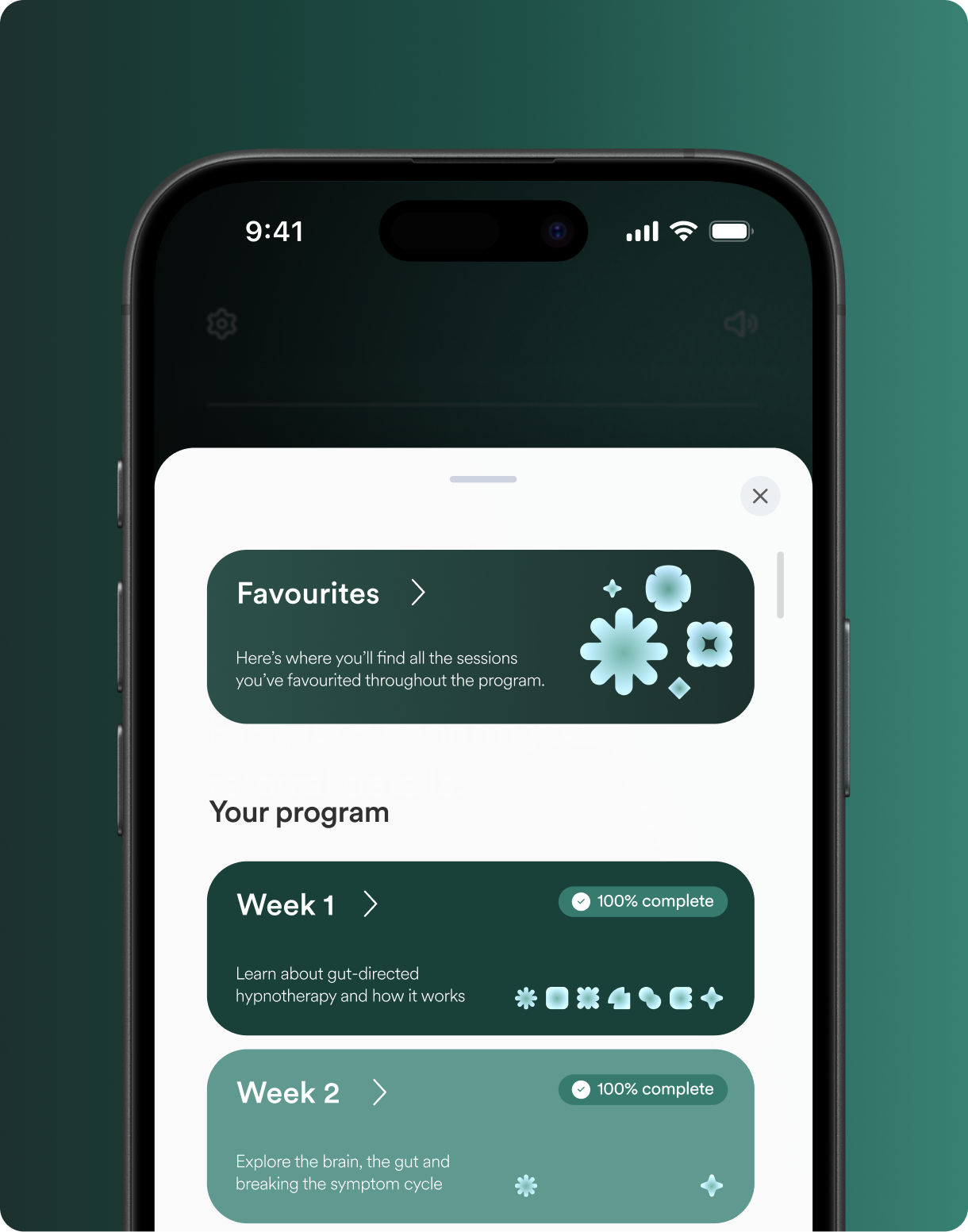
GDH can be completed in-person with a trained hypnotherapy practitioner, or by listening to pre-recorded hypnotherapy sessions. Nerva is an evidence-based six-week hypnotherapy program available through an app that you can listen to at any time, making it convenient and cost-effective.
2. Get moving
It’s well known that regular exercise is good for our general health, but research shows that it can help improve your IBS symptoms too.
Exercise is a great stress reliever (hello, gut-brain axis support!), but it also helps by stimulating movement in the digestive tract, which can be particularly helpful for those suffering from trapped gas and constipation.
Exercise as an IBS management strategy works best when you get moving regularly and commit to a fitness plan in the long term. Unfortunately, a few sweat sessions here and there aren’t enough for you to see the benefits.
Generally, lower-intensity workouts are best for IBS, anything that places your body under too much physical stress may end up making your gut symptoms worse.
3. Manage mealtime behaviors
Focusing on ‘when’ and ‘how’ we eat is often just as important as ‘what’ we eat when it comes to managing IBS. Putting a few simple strategies in place to optimize digestion can make a big difference to gut symptoms, without needing to restrict your favorite foods.
Aim for regular meals throughout the day, a sensitive gut typically likes regularity. It can often stress the gut out when food intake is sporadic or portion sizes are overly large. Smaller meals eaten regularly will be easier for your gut to tolerate and encourage digestion.
We know eating can generate anxiety for people with IBS, but do your best to reduce stress around mealtimes to avoid compromising your digestion. Try to eat in a calm and relaxed environment, physically relax your body, and take a few deep breaths before you start.
Eat slowly and chew each mouthful well to give your body time to recognize you’re eating. This will help get your stomach acid and digestive enzymes ready to go. And the more you chew, the less work the rest of your gut has to do breaking down food, aim for about 20 chews per mouthful.
4. Consider your fluids, fiber, and diet
Staying hydrated is a must for everyone, but if you have IBS it’s particularly important as it’s going to help support healthy bowel movements. Not drinking enough water can lead to hard, dry stools that can be difficult to pass. For most people, drinking between four to six pints (two to three liters) per day is adequate.
Fiber is the other key player for bowel health. Too little means your stool may lack volume and good form, but too much fiber can cause issues. A fiber intake of about 1 ounce (30g) per day is adequate for most people. Including softer, soluble fibers in your diet is particularly helpful for IBS. Try eating more oats, chia seeds, ground flaxseeds, and psyllium husk. Keep in miind, it's always best to take a slow, gradual approach when increasing your fiber intake to give your gut time to adjust.
While IBS dietary triggers can vary greatly between individuals, there are a few known gut irritants you might want to reconsider. These include highly caffeinated drinks, spicy foods, alcohol, and fatty foods such as deep-fried foods, pastries, or creamy sauces.
Questions to ask yourself
There are a few further questions you can ask yourself to determine if a low FODMAP diet is your next step.
Have you spoken with a healthcare clinician to ensure this diet is for you?
The low FODMAP diet shouldn’t be attempted by yourself, and you will need the guidance and support of a healthcare professional to lead you through all three phases.
Do you have three to four months to dedicate to the process?
The low FODMAP diet can’t be rushed, and it is restrictive. If you know you have commitments coming up that are going to make the diet difficult to stick to, rethink your timing.
Do you need extra support from a dietitian?
A dietitian will ensure you can maintain an adequate and enjoyable diet, support your microbiome health, and help you achieve results.
The Wrap Up
A low FODMAP diet can be an effective way to reduce IBS symptoms and identify your food triggers. However, it’s not always the best option for everyone, and there are things you should consider before trying it out. For most people, what triggers their IBS symptoms is multifactorial, so it’s always beneficial to think about managing your IBS from multiple angles. Beneficial management strategies to have in place before starting a low FODMAP diet include supporting your gut-brain axis; developing a reliable meal routine; ensuring you're hydrated; eating enough fiber; and reconsidering known food triggers. Discuss your options with a healthcare practitioner like a dietitian if you think you’re ready to try a low FODMAP diet.
About Amy Minogue
Amy completed a Bachelor of Nutrition and Dietetics (Honors) at Monash University and is an Accredited Practicing Dietitian and Nutritionist, holding a membership with Dietitian’s Australia. Since graduating, Amy has completed further training in the area of gastrointestinal nutrition including the use of a low FODMAP diet for IBS management. Amy specialises in nutrition support for gut disorders, and loves working within this space to help individuals identify potential food triggers, reduce uncomfortable symptoms, and improve their quality of life. Amy appreciates that gut issues can be complex, and knows the importance of considering more than just one’s food intake when searching for answers. Amy aims to educate, motivate, and guide her clients through their health journey, and understands that each client is an individual with their own story to tell. She loves helping clients to feel empowered and knowledgeable to make informed nutrition choices benefiting their health long into the future.
Contact Amy at AM Dietetics
References
Johannesson E, Ringström G, Abrahamsson H, Sadik R. Intervention to increase physical activity in irritable bowel syndrome shows long-term positive effects. World J Gastroenterol. 2015;21(2):600-608. doi:10.3748/wjg.v21.i2.600
Nanayakkara WS, Skidmore PM, O'Brien L, Wilkinson TJ, Gearry RB. Efficacy of the low FODMAP diet for treating irritable bowel syndrome: the evidence to date. Clin Exp Gastroenterol. 2016;9:131-142. Published 2016 Jun 17. doi:10.2147/CEG.S86798
Peters SL, Yao CK, Philpott H, Yelland GW, Muir JG, Gibson PR. Randomised clinical trial: the efficacy of gut-directed hypnotherapy is similar to that of the low FODMAP diet for the treatment of irritable bowel syndrome. Aliment Pharmacol Ther. 2016;44(5):447-459. doi:10.1111/apt.13706
.jpeg)

.jpeg)