When the gut-brain axis is sensitized, the act of digestion itself can provoke symptoms. Clinical observations and trials show that:
The same food may cause symptoms on one day but not another
Elimination diets often help temporarily but lose effectiveness
Symptoms worsen during stress, travel, or fatigue
Symptoms improve during distraction or relaxation
While dietary approaches such as low FODMAP diets can reduce symptoms short-term, long-term restriction may increase gut vigilance and symptom sensitivity if not paired with gut-brain retraining [6].
Food is often a trigger, not the underlying cause.
The role of the nervous system in IBS
IBS is not a psychological condition, but the nervous system plays a central role.
Physiological studies show altered autonomic nervous system function in IBS patients, including changes in vagal tone and stress-response pathways [7]. The body remains in a state of heightened readiness, even in safe conditions.
This response is learned and automatic. It reflects conditioning within the gut-brain axis rather than conscious stress or anxiety.
Once the gut becomes associated with threat, symptoms can occur without tissue damage or disease.
Why IBS tests are normal
Medical evaluation is essential to rule out conditions such as inflammatory bowel disease, celiac disease, thyroid disorders, anemia, or infection.
When these conditions are excluded, ongoing investigation often fails to reveal structural pathology. This aligns with the current scientific understanding of IBS as a functional disorder driven by altered signaling rather than visible damage [2].
Repeated testing can unintentionally reinforce symptom monitoring and fear, which may perpetuate gut-brain dysregulation.
How to treat the root cause of IBS
Because IBS is maintained by dysregulated gut-brain signaling, the most effective treatments target this system directly.
The strongest evidence supports brain-gut therapies, which aim to reduce visceral hypersensitivity and normalize central processing of gut sensations.
Evidence-based brain-gut therapies include:
Gut-directed hypnotherapy
Cognitive behavioral therapy (CBT) specifically adapted for IBS
Exposure-based approaches to food and symptom fear
Interventions that regulate autonomic nervous system activity
Multiple randomized controlled trials show that gut-directed hypnotherapy and CBT for IBS produce significant symptom improvement, with benefits that persist long after treatment ends [8][9].
How to access brain-gut therapy
Access to brain-gut therapy has expanded significantly.
Specialist clinicians
Some gastroenterology clinics and GI-focused psychologists offer gut-directed hypnotherapy or CBT for IBS. Access varies by region and availability.
Digital programs
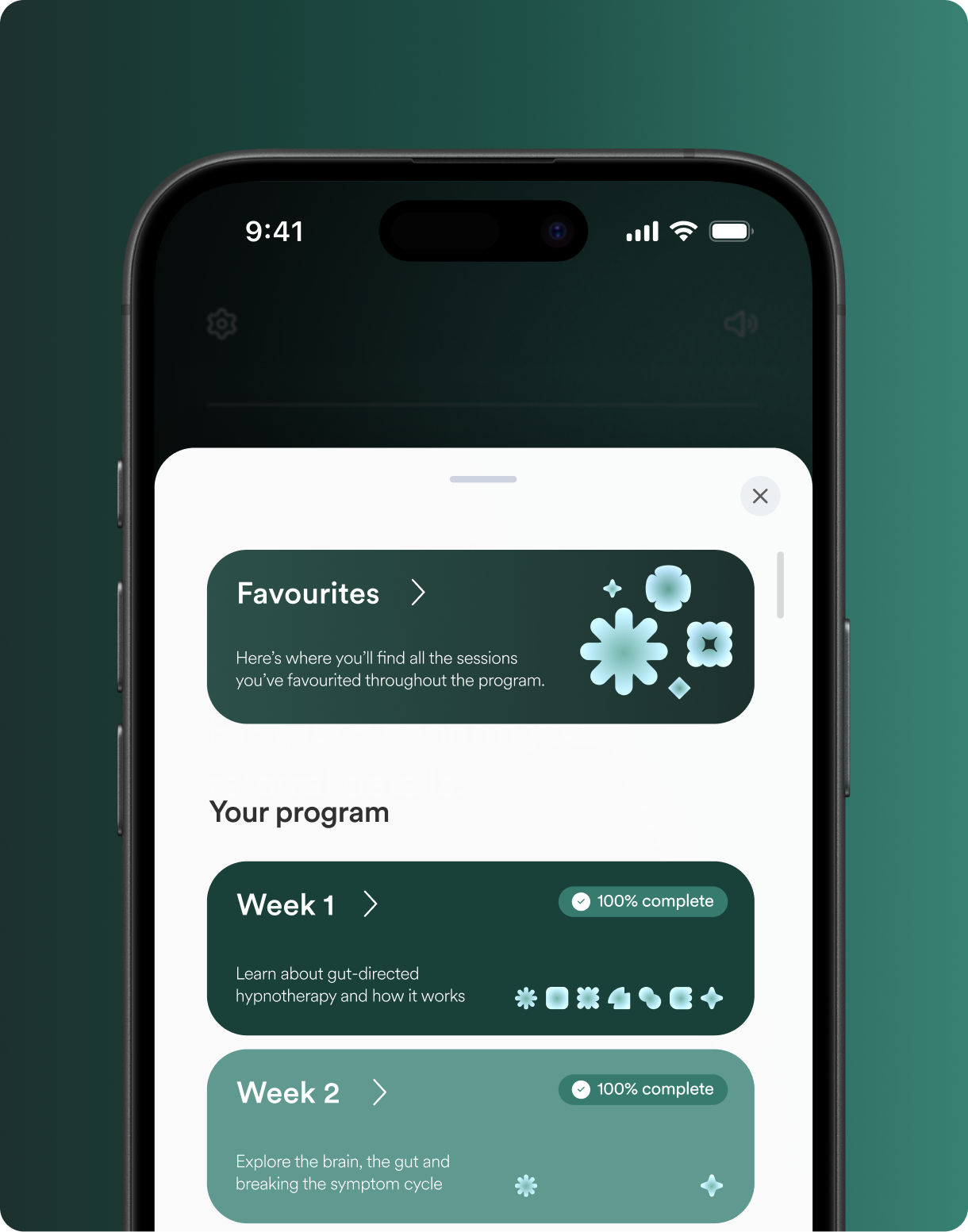
Digitally delivered programs like Nerva now provide structured, evidence-based brain-gut therapy at home. Clinical trials have shown that digital brain-gut therapy can be as effective as in-person care for IBS [10].
Referral pathways
Many gastroenterologists can refer patients for psychological therapies once IBS is diagnosed. Asking specifically for gut-directed hypnotherapy or CBT for IBS improves the likelihood of appropriate referral.
It is important to choose therapies explicitly designed for IBS rather than general stress management.
What improvement usually looks like
Improvement in IBS typically occurs gradually.
Patients often notice:
Reduced pain intensity and urgency
Fewer and shorter flare-ups
Improved tolerance to food and stress
Less fear and monitoring of gut sensations
As the gut-brain system relearns safety, symptoms lose their intensity and frequency.
The bottom line on IBS root causes
For most people, IBS is not caused by a damaged gut, a single food intolerance, or a missed disease.
It is caused by a gut-brain system that learned to stay in threat mode and has not yet relearned regulation.
Addressing that system directly is what leads to lasting improvement.
References
Canavan C, West J, Card T. The epidemiology of irritable bowel syndrome. Clin Epidemiol. 2014.
Drossman DA, Hasler WL. Rome IV-functional GI disorders: disorders of gut-brain interaction. Gastroenterology. 2016.
Thabane M et al. Systematic review and meta-analysis: the incidence and prognosis of post-infectious IBS. Aliment Pharmacol Ther. 2007.
Mayer EA, Gebhart GF. Basic and clinical aspects of visceral hyperalgesia. Gastroenterology. 1994.
Tillisch K et al. Altered brain structure and functional connectivity in IBS. Gastroenterology. 2011.
Staudacher HM et al. Mechanisms and efficacy of dietary FODMAP restriction in IBS. Gastroenterology. 2017.
Pellissier S, Bonaz B. The vagus nerve at the interface of the microbiota-gut-brain axis. Front Neurosci. 2017.
Whorwell PJ et al. Controlled trial of hypnotherapy in IBS. Lancet. 1984.
Lackner JM et al. CBT for IBS: randomized controlled trial. Gastroenterology. 2014.
Peters SL et al. Randomised clinical trial of digital gut-directed hypnotherapy for IBS. Am J Gastroenterol. 2023.
.webp)
.jpeg)

.jpeg)