Yes, and this is one of the most helpful ways to think about it.
A practical model is:
SIBO can increase gas and bloating
IBS can make the gut more sensitive to that bloating
The gut-brain axis determines whether bloating becomes pain, urgency, or distress
Many people with IBS have what researchers call visceral hypersensitivity, meaning the gut becomes extra sensitive to normal stretching or pressure. [1]
So SIBO may add more gas and distension, while IBS affects how strongly the body reacts to it.
This also helps explain why symptoms sometimes persist after antibiotics: reducing bacteria doesn’t automatically reset the nervous system’s sensitivity.
How Is SIBO Diagnosed?
Breath Tests Are Common, but Not Perfect
Most people are diagnosed with SIBO using hydrogen or methane breath tests.
These tests measure gases produced by bacteria after drinking a sugar solution.
Breath tests can sometimes be useful, but major experts highlight serious limitations:
Lactulose tests may reflect how fast food moves through the gut rather than true overgrowth
False positives and false negatives are common
Results don’t always match symptom severity
Testing methods and cutoffs vary widely
The Mayo Clinic has published a detailed critique warning against overreliance on breath testing, especially in IBS populations. [3]
A positive test does not automatically mean SIBO is the main cause of symptoms.
Small Intestine Sampling Is More Direct, but Rare
The most direct test involves collecting fluid from the small intestine during an endoscopy, but this is invasive and not commonly used outside research settings.
Evidence-Based Treatments for SIBO
Treatment depends heavily on the underlying cause.
Antibiotics
Rifaximin is commonly used and has evidence of benefit in some patients, especially those with diarrhea-predominant IBS symptoms. [4]
However, symptoms often return if the underlying drivers (like slow motility) are not addressed.
Diet Changes
Reducing fermentable carbohydrates (such as through a low FODMAP diet) can help reduce bloating and IBS symptoms. [5]
Diet is often most helpful as a symptom-management tool, not a permanent solution.
Supporting Gut Movement
Because slow gut movement is a major contributor to bacterial buildup, preventing relapse often requires addressing motility, not just bacteria. [2]
This is one reason repeated antibiotic cycles alone often fall short.
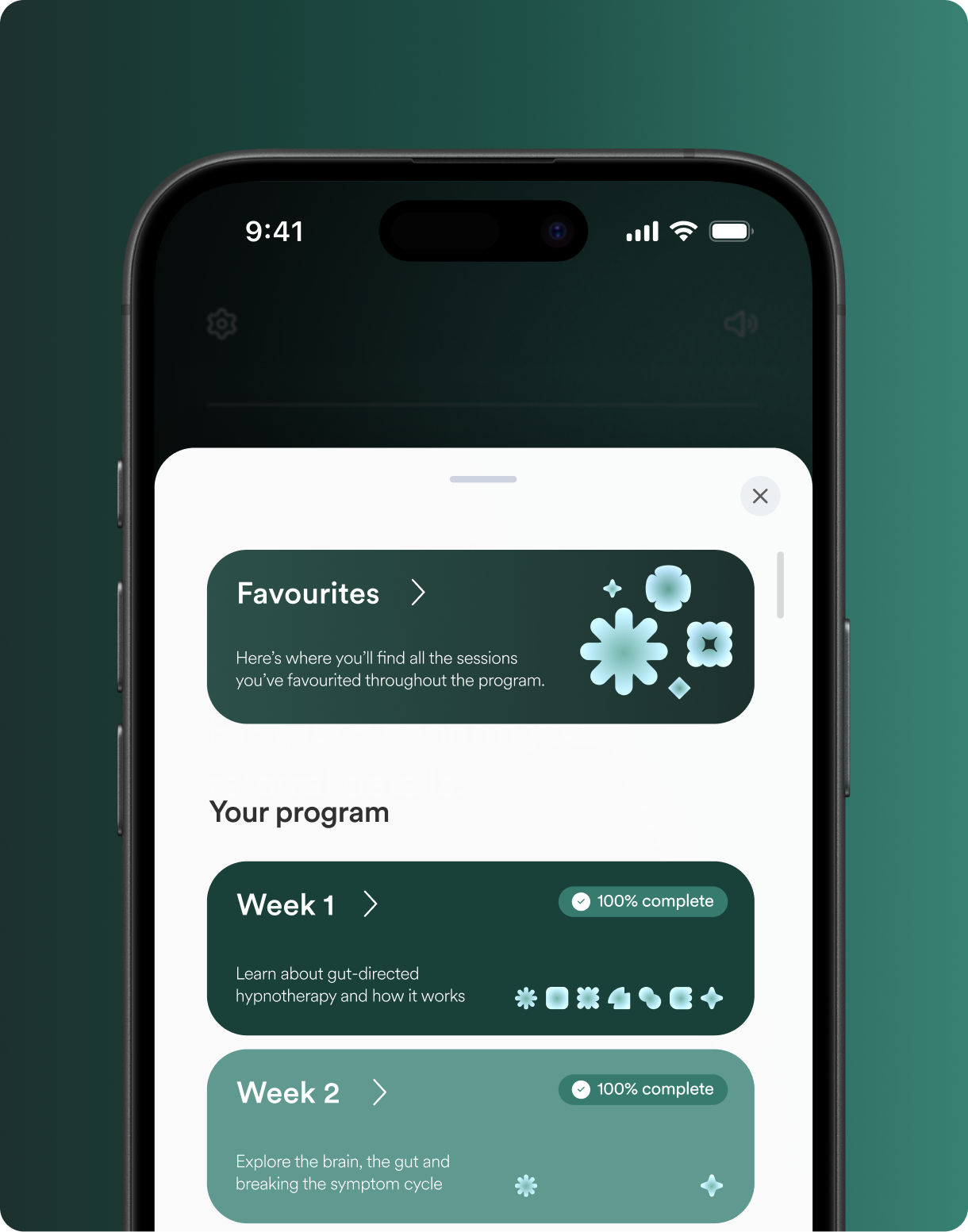
Where Brain-gut Therapy Fits In
Many people get stuck in cycles of:
Ongoing symptoms despite treatment
Fear of eating or flare-ups
Constant attention to gut sensations
A stress response that keeps the gut “on high alert”
Because IBS is fundamentally a gut-brain interaction disorder, treatments that target the brain-gut axis have strong evidence.
Systematic reviews show it can significantly improve IBS symptoms, with long-lasting benefits comparable to many medical therapies. [6]
The British Society of Gastroenterology guidelines recommend brain-gut therapies as part of evidence-based IBS care. [5]
For people with overlapping IBS and suspected SIBO, this matters because:
SIBO may contribute to bloating
IBS drives symptom sensitivity
Gut-brain therapy helps reduce the nervous system’s overreaction
An integrated approach often works better than chasing bacterial eradication alone.
When to Talk to a Doctor
You should speak with a gastroenterologist if you have:
These are not typical IBS features and require further evaluation.
The Bottom Line
SIBO and IBS overlap, but they are not the same condition.
SIBO can contribute to bloating and fermentation in some people
IBS is a broader gut-brain sensitivity disorder
Breath tests are imperfect and should be interpreted cautiously
Treatment works best when addressing both gut physiology and nervous system sensitivity
For many people, lasting improvement comes from combining medical care with evidence-based gut-brain therapy.
References
Drossman DA, Hasler WL. Rome IV–Functional GI Disorders: Disorders of Gut-Brain Interaction. Gastroenterology. 2016.
https://doi.org/10.1053/j.gastro.2016.02.032
Rezaie A, Buresi M, Lembo A, et al. Hydrogen and Methane-Based Breath Testing in Gastrointestinal Disorders: The North American Consensus. Am J Gastroenterol. 2017.
https://doi.org/10.1038/ajg.2017.46
Mayo Clinic. An updated appraisal of the SIBO hypothesis and the limits of breath testing. 2024.
https://www.mayoclinic.org/medical-professionals/digestive-diseases/news/an-updated-appraisal-of-the-sibo-hypothesis-and-the-limits-of-breath-testing/mac-20574581
Pimentel M, Lembo A, Chey WD, et al. Rifaximin Therapy for Patients with IBS Without Constipation. N Engl J Med. 2011.
https://doi.org/10.1056/NEJMoa1004409
Vasant DH, Paine PA, Black CJ, et al. British Society of Gastroenterology guidelines on the management of irritable bowel syndrome. Gut. 2021.
https://gut.bmj.com/content/70/7/1214
Black CJ, Thakur ER, Houghton LA, et al. Efficacy of psychological therapies for irritable bowel syndrome: systematic review and network meta-analysis. Gut. 2020.
https://doi.org/10.1136/gutjnl-2020-321191
.webp)
.jpeg)

.jpeg)