Many people with IBS find themselves caught in a repeating cycle: anxiety triggers gut symptoms, and those symptoms trigger more anxiety. This loop keeps the nervous system in a prolonged state of activation, making recovery harder. Gut-directed hypnotherapy interrupts this cycle by working directly on the gut-brain communication pathway – not through willpower or distraction, but by using a deeply relaxed state to promote parasympathetic nervous system activity through the vagus nerve.
The clinical evidence for this is substantial. A 2025 systematic review and meta-analysis across 12 studies involving 1,158 IBS patients found that gut-directed hypnotherapy significantly improved global IBS symptoms and reduced pain compared to standard interventions.⁴ A randomised controlled trial from Monash University showed that 81% of participants using the Nerva gut-brain therapy program achieved clinically significant improvement in IBS symptoms, with 71% reporting a clinically significant reduction in abdominal pain.⁵
"Patients that are really good candidates for hypnosis really have that understanding of hypervigilance and that visceral hypersensitivity that they experience that worsens their symptoms. And they have that insight that stress can certainly worsen those symptoms." – Dr. Megan Riehl, GI Psychologist, Clinical Director of the GI Behavioral Health Program at the University of Michigan
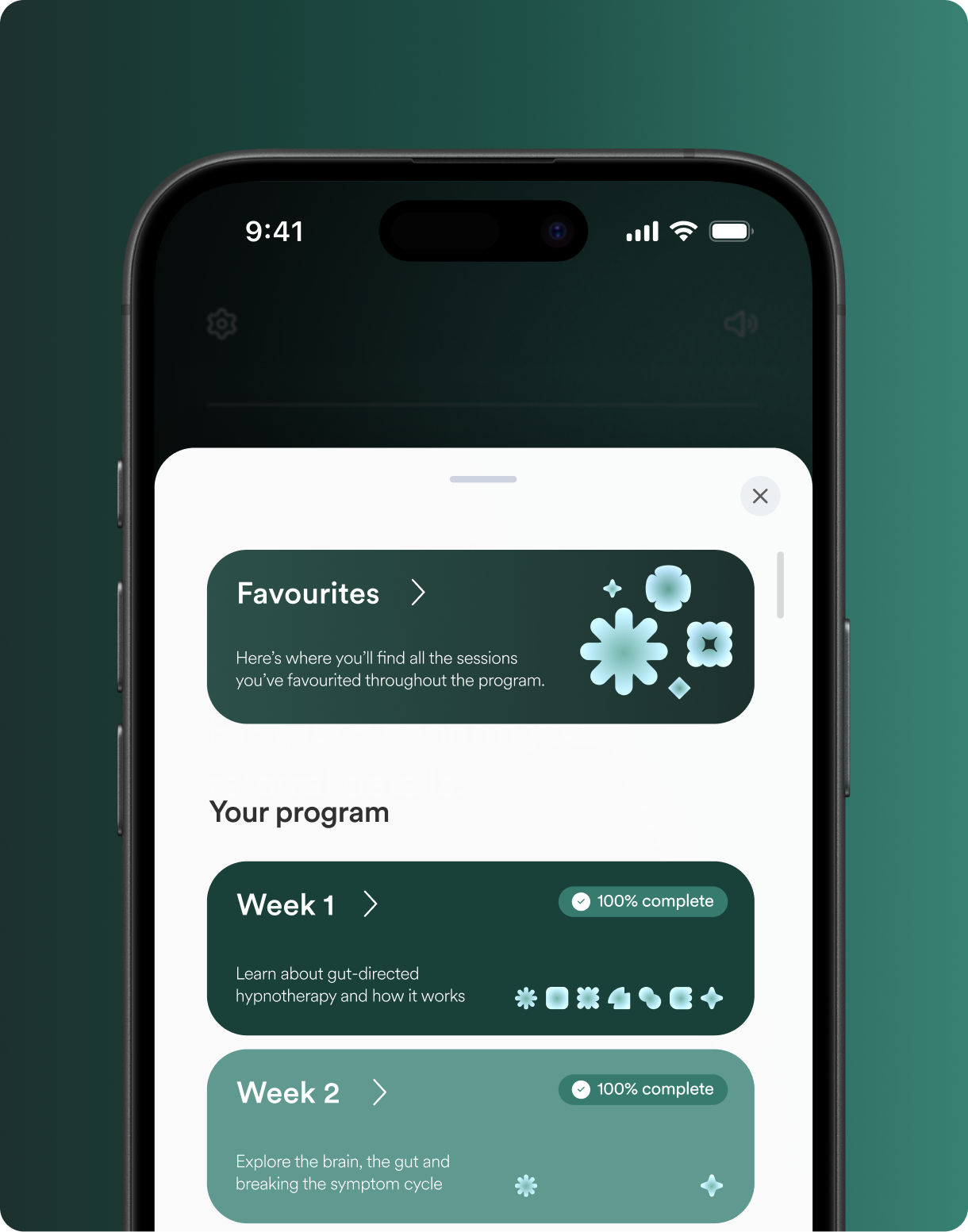
See gut-directed hypnotherapy in action – and how a daily session works to calm vagus nerve signaling and ease the gut-brain miscommunication driving IBS symptoms.
How diaphragmatic breathing calms your vagus nerve and reduces IBS symptoms
Diaphragmatic breathing is a simple yet powerful way to interrupt the stress–symptom cycle and activate your parasympathetic nervous system through the vagus nerve.
Also known as belly breathing, this technique fully engages your diaphragm, the large muscle at the base of your lungs, along with your stomach and abdominal muscles, allowing you to take deeper, slower breaths. Most people naturally fall into shallow chest breathing, which keeps the body in a low-level state of stress. In contrast, diaphragmatic breathing increases oxygen flow, slows your heart rate, stabilizes blood pressure, and helps calm the nervous system.
By stimulating the vagus nerve, diaphragmatic breathing promotes relaxation throughout the body and supports digestion. For people with IBS, this matters because it directly counteracts the chronic sympathetic activation that keeps the gut in a state of heightened reactivity.
This isn’t just theoretical. In a randomized controlled study in constipation-predominant IBS, slow diaphragmatic breathing significantly improved symptom severity, rectal sensitivity, and bowel function.⁷
Even a few minutes of intentional breathing each day can help restore balance to your gut–brain connection, reduce stress-related symptoms, and build resilience against future flare-ups.
How to practice diaphragmatic breathing for IBS
The steps below show exactly how to practice diphragmatic breathing correctly so it works at a nervous system level – not just as a relaxation exercise – and shift your body out of a stress response.

Your goal? Maintain your breathing at this rate for 15 minutes every day.
Developing this habit makes it physiologically impossible for your sympathetic nervous system to be in total control.
If you choose to try gut-directed hypnotherapy through the Nerva gut-brain therapy program, you can apply this breathing technique during your daily sessions to ensure the therapeutic suggestions are being absorbed in a relaxed state, teaching your body to be calm and embrace healthy changes.
What is cognitive defusion? Retraining your thoughts for IBS
The vagus nerve doesn't just respond to physical signals – it responds to thoughts. When the mind locks onto gut-related fears – "I'm going to have a terrible flare-up," "I can't eat that," "I'll never know where the bathrooms are" – those thoughts activate the same stress pathways that trigger real symptoms. The gut tightens. The nervous system stays on high alert.
This is cognitive fusion: when anxious thoughts about IBS are treated as facts rather than observations. And the tighter you fuse to them, the more they amplify your symptoms.
Cognitive defusion – a technique from acceptance and commitment therapy (ACT) – works in the opposite direction. Instead of trying to challenge or suppress these thoughts, you learn to observe them from a distance. There's a difference between thinking "I'm going to be in pain all day" and noticing "I'm having the thought that I'll be in pain all day." The thought doesn't disappear, but it loses its grip on your nervous system.
In practice, this might look like:
Silly voices – saying a feared thought aloud in a cartoon voice so it becomes harder to take as fact
Noticing language – "I notice I'm thinking I'll have a flare-up at dinner" rather than "I will have a flare-up at dinner"
Driving the bus – picturing anxious thoughts as rowdy passengers on your bus; you keep driving, they can't take the wheel
ACT-based approaches that include cognitive defusion have shown significant improvements in IBS symptoms, quality of life, and gut-specific anxiety – with results maintained at six-month follow-up.⁸
This is why Nerva's gut-brain therapy program pairs gut-directed hypnotherapy with cognitive-behavioral education: retraining the vagus nerve means addressing both the physical signal and the mental amplifier that turns it into a crisis.
Frequently asked questions
What happens when the vagus nerve isn’t working properly?
When the vagus nerve isn’t functioning well, communication between the brain and gut becomes disrupted. This can lead to symptoms like bloating, abdominal pain, irregular bowel movements, and increased sensitivity to stress. In IBS, this often shows up as the gut overreacting to normal digestion.
Can the vagus nerve cause IBS symptoms?
The vagus nerve doesn’t directly cause IBS, but it plays a key role in how symptoms develop. When vagal signaling is reduced or misfiring, the gut can become more sensitive and reactive, contributing to pain, bloating, and changes in bowel habits.
How do I know if my vagus nerve is causing my symptoms?
There’s no single test to confirm this, but patterns like stress-triggered symptoms, heightened gut sensitivity, and ongoing symptoms without structural issues can point to nervous system involvement. This is common in gut-brain disorders like IBS.
How do you calm the vagus nerve quickly?
Slow, controlled breathing is one of the fastest ways to activate the vagus nerve. Extending your exhale and breathing from the diaphragm signals the body to shift out of a stress response, which can help settle gut symptoms in the moment.
What is the fastest way to stimulate the vagus nerve?
Diaphragmatic breathing is the most direct and accessible method. Other approaches include meditation and structured mind-body therapies, which work over time to improve vagal activity and nervous system balance.
Can anxiety affect the vagus nerve and gut?
Yes, anxiety activates the stress response, which suppresses vagal signaling and disrupts digestion. This can increase gut sensitivity and trigger symptoms like urgency, cramping, or bloating, even without a clear physical cause.
Can you improve vagus nerve function naturally?
Vagus nerve function can improve through consistent nervous system regulation practices such as diaphragmatic breathing, gut-directed hypnotherapy, and relaxation techniques. These approaches help restore balance in gut-brain signaling and reduce symptom sensitivity over time.
References
Veldman MHJ, Hawinkels LAJ, Keszthelyi D. Efficacy of vagus nerve stimulation in gastrointestinal disorders: a systematic review. Gastroenterol Rep. 2025. doi:10.1093/gastro/goaf009
Camilleri M, Coulie B, Tack JF. Visceral hypersensitivity: facts, speculations, and challenges. Gut. 2001;48(1):125-131. doi:10.1136/gut.48.1.125
Bonaz B, Bazin T, Pellissier S. The vagus nerve at the interface of the microbiota-gut-brain axis. Front Neurosci. 2018;12:49. doi:10.3389/fnins.2018.00049/
Adler EC, Levine EH, Ibarra AN, et al. Gut-directed hypnotherapy for irritable bowel syndrome: a systematic review and meta-analysis. Neurogastroenterol Motil. 2025;37(7):e70037. doi:10.1111/nmo.70037
Anderson EJ, Peters SL, Gibson PR, Halmos EP. Comparison of digitally delivered gut-directed hypnotherapy program with an active control for irritable bowel syndrome. Am J Gastroenterol. 2025;120(2):440-448. doi:10.14309/ajg.0000000000002921
Hamasaki H. Effects of diaphragmatic breathing on health: a narrative review. Medicines (Basel). 2020;7(10):65. doi:10.3390/medicines7100065
Liu Y, Jiang T, Shi T, et al. Slow, deep breathing intervention improved symptoms and altered rectal sensitivity in patients with constipation-predominant irritable bowel syndrome. Front Physiol. 2022;13:1046268.
Ferreira NB et al. Acceptance and commitment therapy for IBS and IBD: a narrative review. Transl Gastroenterol Hepatol. 2024;9:35. doi:10.21037/tgh-24-10
.webp)

.jpeg)

.jpeg)