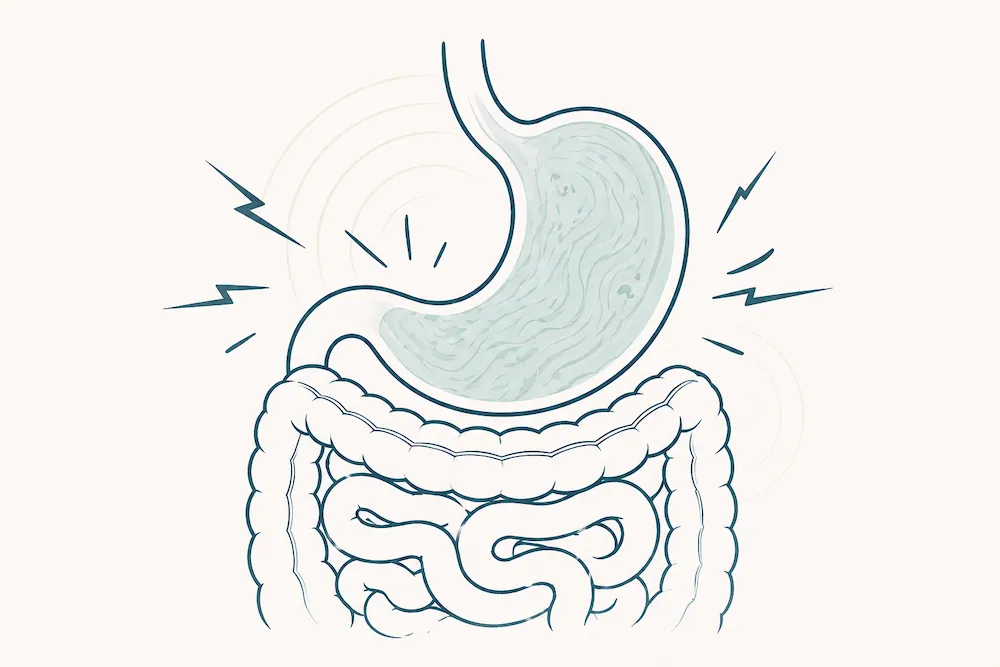
Enter mind-body interventions.
These three research-backed options could become a key component of your IBS management plan.
Cognitive behavioral therapy (CBT)
CBT will teach you how to challenge negative thoughts about your IBS. The research has shown that symptoms actually become worse when you allow your thoughts to loop around your mind in an endless circle of negativity.
CBT can help you reduce these thoughts and end your catastrophizing by teaching you to focus on coping strategies and giving you tools to manage your symptoms better.
There’s also encouraging evidence from more than 40 clinical trials that one-third of people with IBS benefitted from CBT.
Hypnotherapy
Gut-directed hypnotherapy has entered the mainstream, with more and more people turning to their minds to treat their guts.
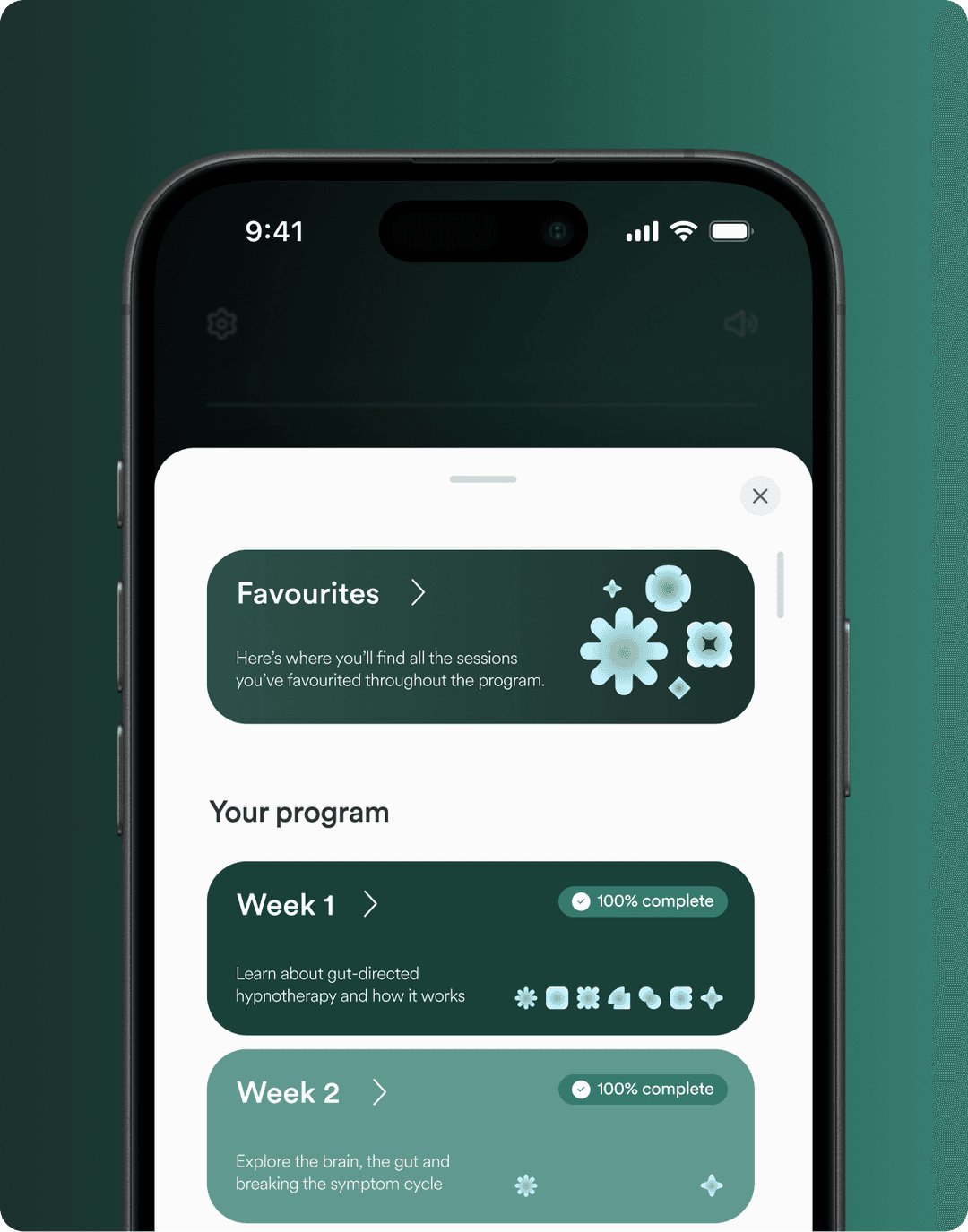
Hypnotherapy for IBS works by guiding you into a hypnotic state, which is when you feel a sense of deep relaxation but still have a heightened state of focus, a pocket watch won’t be dangled in front of you, and no one will seize control of your mind like you might have seen on YouTube. Instead, when you’re participating in a program like Nerva, you will be in complete control while being led through visualizations designed to heal and treat your gut.
Scientists found that gut-directed hypnotherapy is effective for between 70-80% of people with IBS. Their study also demonstrated how just six weeks of hypnotherapy could lessen IBS symptoms in 70% of patients, which is comparable to the effectiveness of following a low FODMAP diet.
https://www.npr.org/2022/10/10/1127795077/a-surprising-treatment-is-helping-people-with-gastrointestinal-or-stomach-issues
Mindfulness-based stress reduction (MBRS)
Mindfulness-based stress reduction (MBSR) therapy could be a valuable addition to your treatment toolbox if you’re plagued by anxiety and stress about your IBS symptoms.
The therapy will help you reduce symptoms by developing mindfulness skills, such as knowledge of your breathing process and conscious eating. The idea behind MBSR is you will learn to withhold judgment about yourself as you observe and experience your pain, thoughts, and feelings.
Scientists say it improves your mind-body connection by regulating your autonomic arousal by enhancing parasympathetic tone. So, what does this actually mean? Harvard Medical School explains it simply: we all have a sympathetic and parasympathetic nervous system. Your sympathetic functions like a car’s gas pedal, triggering the fight or flight response. While your parasympathetic system acts as the brake, calming your body down after the danger has passed. MBRS helps tap into that calming process, lessening your IBS-induced anxiety.
Research examining 18 different studies concluded that MBSR helped people with chronic illnesses improve their condition. Another small study demonstrated how MBSR led to meaningful positive changes and improved quality of life for people with gastrointestinal concerns.
The Wrap Up
While there’s no cure for IBS, there are many science-backed treatment options that can help you lessen your symptoms and improve your quality of life. Over-the-counter solutions like psyllium, probiotics, anti-diarrheal medication, and laxatives are affordable and accessible. Each is proven by research to improve your symptoms, though not all are suitable as long-term solutions. As anxiety and IBS often go hand in hand, prescription antidepressants can help treat IBS. Tricyclic antidepressants and SSRIs are both effective IBS treatment options. Switching to a low FODMAP diet has been proven to reduce symptoms in 70% of people. The diet begins by eliminating foods high in FODMAPs, before reintroducing them to determine which are causing you the most concern. Mind-body interventions like CBT, gut-directed hypnotherapy and MBSR focus on changing the thoughts ruminating in your mind to treat your gut. Scientists have long established this mind-gut connection, and these options could all help treat your symptoms.
References
Our Sources
Aragon G, Graham DB, Borum M, Doman DB. Probiotic therapy for irritable bowel syndrome. Gastroenterol Hepatol (N Y). 2010;6(1):39-44.
Ballou S, Bedell A, Keefer L. Psychosocial impact of irritable bowel syndrome: A brief review. World J Gastrointest Pathophysiol. 2015;6(4):120-123. doi:10.4291/wjgp.v6.i4.120
Black CJ, Thakur ER, Houghton LA, Quigley EMM, Moayyedi P, Ford AC. Efficacy of psychological therapies for irritable bowel syndrome: systematic review and network meta-analysis. Gut. 2020;69(8):1441-1451. doi:10.1136/gutjnl-2020-321191
Bove A, Pucciani F, Bellini M, et al. Consensus statement AIGO/SICCR: diagnosis and treatment of chronic constipation and obstructed defecation (part I: diagnosis). World J Gastroenterol. 2012;18(14):1555-1564. doi:10.3748/wjg.v18.i14.1555
Dalton C, Drossman D. The Use Of Antidepressants In The Treatment Of Irritable Bowel Syndrome And Other Functional GI Disorders. Chapel Hill: University North Carolina (UNC) https://www.med.unc.edu/ibs/wp-content/uploads/sites/450/2017/10/IBS-and-Antidepressants.pdf. Accessed February 16, 2022.
Don't bomb the bowel with laxatives. Harvard Health Publishing. https://www.health.harvard.edu/diseases-and-conditions/dont-bomb-the-bowel-with-laxatives. Published September 25, 2019. Accessed February 23, 2022.
Friedrich M, Grady SE, Wall GC. Effects of antidepressants in patients with irritable bowel syndrome and comorbid depression. Clin Ther. 2010;32(7):1221-1233. doi:10.1016/j.clinthera.2010.07.002
Gao J. Correlation between anxiety-depression status and cytokines in diarrhea-predominant irritable bowel syndrome. Exp Ther Med. 2013;6(1):93-96. doi:10.3892/etm.2013.1101
Ghandi F, Sadeghi A, Bakhtyari M, Imani S, Abdi S, Banihashem SS. Comparing the Efficacy of Mindfulness-Based Stress Reduction Therapy with Emotion Regulation Treatment on Quality of Life and Symptoms of Irritable Bowel Syndrome. Iran J Psychiatry. 2018;13(3):175-183.
Gunn D, Fried R, Lalani R et al. Treatment of irritable bowel syndrome with diarrhoea using titrated ondansetron (TRITON): study protocol for a randomised controlled trial. Trials. 2019;20(1). doi:10.1186/s13063-019-3562-6
Halmos EP, Power VA, Shepherd SJ, Gibson PR, Muir JG. A diet low in FODMAPs reduces symptoms of irritable bowel syndrome. Gastroenterology. 2014;146(1):67-75.e5. doi:10.1053/j.gastro.2013.09.046
Harvie RM, Chisholm AW, Bisanz JE, et al. Long-term irritable bowel syndrome symptom control with reintroduction of selected FODMAPs. World J Gastroenterol. 2017;23(25):4632-4643. doi:10.3748/wjg.v23.i25.4632